Retail Shrink Hit $132 Billion. Here Is How AI Fights Back
The numbers are staggering, and they are getting worse. The National Retail Federation reported US retail shrinkage at $112.1 billion in 2023. Updated estimates incorporating the latest data have pushed that figure to $132 billion, a number so large that it exceeds the GDP of over 100 countries. Shrinkage is not a rounding error in retail economics. It is an existential pressure on margins that are already razor-thin.
Understanding where this loss originates is essential to combating it. The breakdown is well documented:
- Shoplifting: 36% of total shrinkage
- Employee theft: 29% of total shrinkage
- Process and administrative errors: 25% of total shrinkage
- Vendor fraud: 5% of total shrinkage
- Other/unknown sources account for the remainder
What is striking about this distribution is that the majority of shrinkage is not caused by external theft alone. Internal process failures, employee misconduct, and administrative errors collectively account for more loss than shoplifting. This means that traditional anti-theft measures, security guards, EAS tags, locked display cases, address barely a third of the problem.
This is precisely where retail computer vision AI changes the equation. By deploying intelligent visual analytics across the store environment, retailers can address shrinkage from every source simultaneously, and often detect problems that no human observer could identify at scale.
Ten AI Applications for Retail Loss Prevention and Operations
The breadth of AI applications now available to retailers extends far beyond simple theft detection. The following ten use cases illustrate how computer vision and intelligent automation are being deployed across the retail value chain:
- Self-Checkout Monitoring: Computer vision tracks every item scanned at self-checkout stations, detecting skip-scans, ticket switching, pass-arounds, and other common fraud patterns. With self-checkout shrink rates estimated at 4-5 times higher than staffed registers, this application alone can recover significant losses.
- Shelf Scanning and Out-of-Stock Detection: Automated shelf analysis identifies out-of-stock conditions, misplaced products, and pricing errors in real time, triggering restocking workflows before sales are lost.
- Delivery Zone Monitoring: AI monitors receiving docks and delivery areas to verify delivery completeness, detect unauthorized removals, and ensure that vendor deliveries match purchase orders, a pioneering application developed by Sensfix.
- Produce Quality Inspection: Computer vision evaluates the condition of fresh produce on shelves and in receiving, identifying spoilage, damage, and quality issues that lead to waste and customer dissatisfaction.
- Foot Traffic Analytics: AI-powered people counting and flow analysis helps retailers optimize store layouts, staffing levels, and promotional placement based on actual customer movement patterns.
- Loss Prevention Alerts: Behavioral analytics identify suspicious activity patterns, concealment, unusual dwell time in high-value areas, coordinated group behavior, and alert loss prevention teams in real time.
- Inventory Anomaly Detection: Computer vision correlated with POS data identifies discrepancies between what should be on shelves and what actually is, flagging potential theft, process errors, or system inaccuracies.
- Planogram Compliance: Automated verification ensures that products, signage, and promotional displays match planned configurations, protecting brand agreements and optimizing merchandising revenue.
- Centralized Compliance Dashboard: A unified view across all store locations enables regional and corporate teams to monitor compliance, shrinkage trends, and operational metrics, another application pioneered by Sensfix.
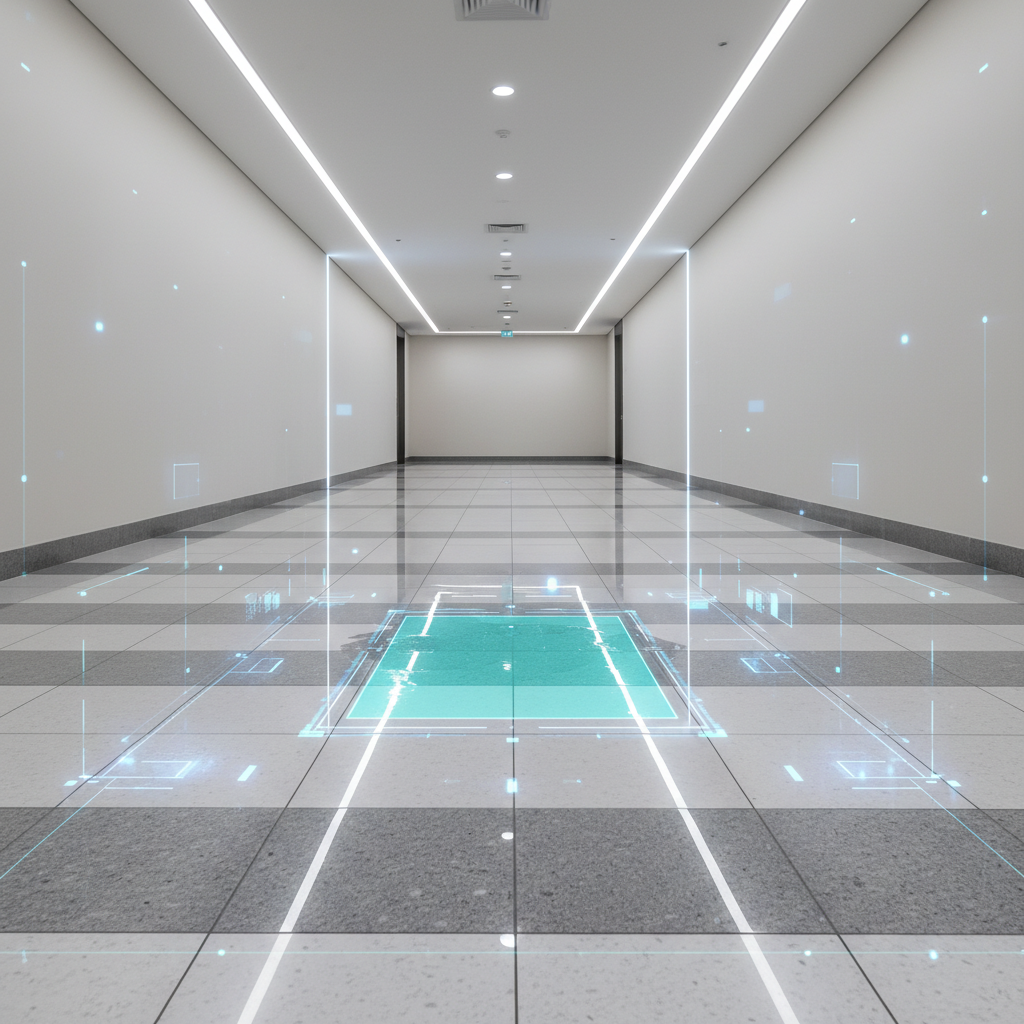
- Employee Safety Monitoring: AI ensures compliance with safety protocols in back-of-house operations, proper use of equipment, clear emergency exits, wet floor detection, reducing liability and protecting staff.
Self-Checkout Monitoring
Detect skip-scans, ticket switching, and pass-arounds at self-checkout stations.
Shelf Scanning & OOS Detection
Identify out-of-stock conditions, misplaced products, and pricing errors in real time.
Delivery Zone Monitoring
Verify delivery completeness and detect unauthorized removals at receiving docks.
Produce Quality Inspection
Evaluate fresh produce condition identifying spoilage, damage, and quality issues.
Foot Traffic Analytics
Optimize store layouts, staffing levels, and promotional placement based on movement patterns.
Loss Prevention Alerts
Behavioral analytics identify suspicious activity patterns and alert LP teams in real time.
Inventory Anomaly Detection
Correlate CV with POS data to flag potential theft, process errors, or inaccuracies.
Planogram Compliance
Automated verification that products and displays match planned configurations.
Centralized Compliance Dashboard
Unified view across all store locations for compliance, shrinkage, and operational metrics.
Employee Safety Monitoring
Ensure compliance with safety protocols in back-of-house operations.
From Point-of-Loss to Point-of-Prevention
The fundamental shift that retail computer vision AI enables is moving from reactive loss accounting to proactive loss prevention. Traditional shrinkage management discovers losses after the fact, during inventory audits, cycle counts, or financial reconciliation. By the time the loss is quantified, the merchandise is long gone and the process failure has been repeated hundreds of times.
AI-powered systems detect loss events as they happen or, in many cases, before they happen. A self-checkout monitor that identifies a skip-scan in progress can trigger an immediate intervention. A delivery zone camera that detects an incomplete vendor delivery can flag the discrepancy before the driver leaves the dock. A shelf scanner that identifies a product consistently going out of stock faster than sales data would predict can uncover a theft pattern that would otherwise go unnoticed for months.
The retailers winning the shrinkage battle are not the ones with the most security guards. They are the ones whose AI systems can see patterns across thousands of transactions, deliveries, and shelf states that no human team could monitor.
Case Study: 80% Inventory Loss Reduction
The impact of AI-driven loss prevention is not theoretical. A European lighting manufacturer facing significant inventory losses across its distribution operations evaluated multiple solutions, including established platforms like eMaint and ServiceNow. The company ultimately selected Sensfix for its ability to combine visual monitoring with intelligent workflow automation.
The results were decisive: an 80% reduction in inventory losses. The system identified both the external theft vectors and the internal process failures that were contributing to shrinkage, a combination that neither pure security solutions nor pure inventory management platforms could address independently.
A similar deployment at a Bay Area automotive manufacturer achieved the same 80% inventory loss reduction, demonstrating that the approach scales across different retail and distribution environments. The common factor was the ability to correlate visual evidence with operational data to identify root causes rather than just symptoms.
Why Traditional Solutions Fall Short
The retail technology landscape is crowded with point solutions: POS exception reporting tools, video surveillance systems, inventory management platforms, workforce management software. Each addresses one facet of the shrinkage problem. None addresses the problem holistically.
POS exception reporting can identify unusual transaction patterns, but it cannot see what happened in the aisle before the transaction. Video surveillance can record incidents, but reviewing thousands of hours of footage for subtle shrinkage patterns is practically impossible without AI. Inventory management can quantify losses, but it cannot explain why they occurred or prevent recurrence.
Retail computer vision AI bridges these gaps by creating a continuous visual record that is automatically analyzed for anomalies, correlated with transactional data, and surfaced to the right teams at the right time. When deployed on a platform like the Sensfix SAAI Suite, these capabilities are further enhanced by multimodal intelligence, combining visual data with IoT sensors, workflow context, and operational rules.
The Retail AI Imperative
With shrinkage now consuming over $132 billion annually in the US market alone, the question for retailers is no longer whether AI-powered loss prevention is worth the investment. The math is unambiguous. A retailer experiencing 2% shrink on $500 million in revenue is losing $10 million annually. Even a 50% reduction in that figure, well below the 80% demonstrated in actual deployments, delivers $5 million in recovered margin.
The technology is proven. The use cases are validated. The economic returns are documented. What remains is execution: selecting a platform that addresses shrinkage holistically rather than treating each loss vector as a separate problem, and deploying it with the operational integration necessary to convert AI detections into business outcomes. Retailers who act decisively on this opportunity will not only recover lost margin; they will build an operational intelligence capability that compounds in value over time.
Ready to See These Results?
Book a personalized demo and see how the SAAI Suite delivers measurable outcomes for your operations.