Why Now? Four Market Forces Driving AI in Maintenance
For decades, facilities maintenance has resisted the digital transformation that reshaped manufacturing, logistics, and retail. The reasons were understandable: maintenance environments are messy, unpredictable, and infinitely variable. Every building is different, every piece of equipment ages differently, and every failure mode requires different expertise. But four converging market forces are now making AI-powered maintenance not just viable, but inevitable.
Force 1: IoT Maturity Across Industries
The first force is the maturity of Internet of Things (IoT) infrastructure. For years, IoT promised a revolution in industrial monitoring, but the reality often fell short. Sensors were expensive, connectivity was unreliable, and the data they generated had nowhere useful to go. That landscape has fundamentally changed.
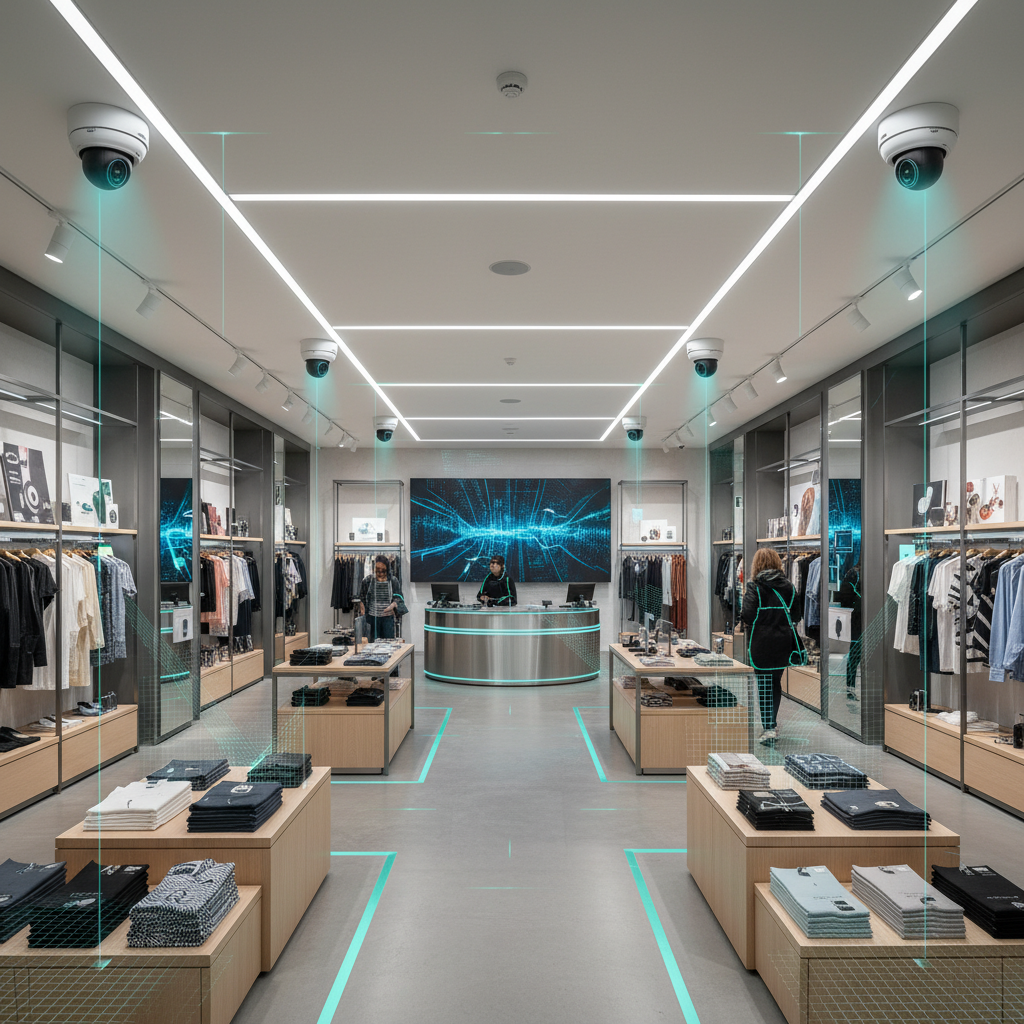
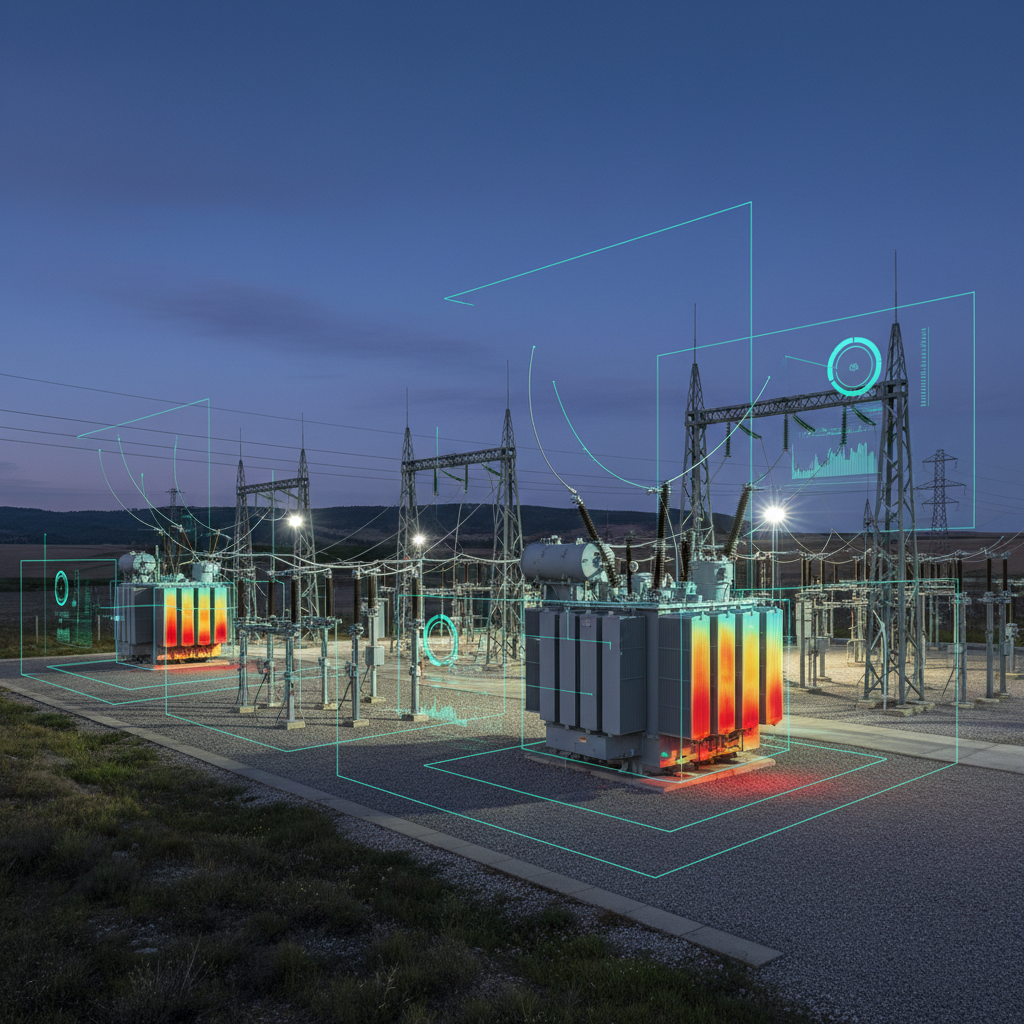
Today’s commercial buildings and industrial facilities are instrumented at a level that was inconceivable a decade ago. HVAC systems report operating parameters in real time. Elevators transmit performance data to manufacturer dashboards. Even simple devices, lighting fixtures, water heaters, access control panels, increasingly ship with embedded connectivity. The critical mass of connected devices has finally reached a threshold where AI can deliver meaningful value.
The shift is not just about the volume of sensors but the quality and standardization of the data they produce. Protocols like MQTT, Modbus, OPC-UA, and BACnet have matured to the point where integrating data from diverse building systems is an engineering challenge, not a research problem. This means an AI platform can ingest signals from HVAC, electrical, plumbing, and security systems simultaneously, exactly the kind of multimodal data fusion that modern maintenance demands.
- 1Sensor Proliferation
Cost of IoT sensors dropped 70% since 2015. Buildings now have 10-100x more data points than a decade ago.
- 2Protocol Standardization
MQTT, BACnet, Modbus, and REST APIs enable cross-system data integration without custom middleware.
- 3Edge Computing
On-premise inference enables real-time AI on camera feeds and sensor streams without cloud latency.
- 4AI-Ready Data
Structured, timestamped sensor data is now clean enough for machine learning models to deliver actionable predictions.
Force 2: Aging Workforce and Knowledge Loss
The second force is demographic: the mass retirement of baby boomer maintenance workers. This is not a distant concern; it is happening now. The average age of a facility maintenance professional in the United States is well over 50, and the pipeline of younger replacements is thin. When a veteran technician with 30 years of experience retires, they take with them an irreplaceable store of institutional knowledge: the sounds that indicate a failing compressor, the vibration pattern that precedes a pump bearing failure, the seasonal quirks of a building’s HVAC system.
Facility managers already have 61% more work orders than last year, yet budget cuts and hiring freezes mean understaffing is the new normal. Building operators are being compelled to scale operations to smaller, previously uneconomical facilities, leveraging less skilled labor. They lack a solution that equips unskilled labor for complex maintenance, bridging the skills gap for scalable operations.
AI directly addresses this knowledge transfer crisis. When a multimodal AI platform scans a device manual and creates a digital workflow, it captures procedural knowledge that would otherwise exist only in a veteran’s head. When audio AI learns to detect the signature of a failing bearing, it codifies expertise that took decades to accumulate. The AI doesn’t replace the technician; it ensures that the next generation of technicians arrives on site with the same diagnostic capabilities as their predecessors.
Force 3: Post-Pandemic Digital Transformation Acceleration
The COVID-19 pandemic forced every industry to confront its dependence on physical presence and manual processes. For facilities maintenance, the impact was profound and permanent. Post-COVID hybrid work has reduced profitability in managing commercial buildings and industrial facilities. Buildings designed for full occupancy now operate at 38% vacancy, fundamentally changing the economics of building management.
The pandemic revealed how fragile manual maintenance processes really are. When teams couldn’t be on-site, buildings with automated monitoring and remote diagnostics continued operating. Buildings dependent on manual inspections fell behind on maintenance schedules, accelerating equipment degradation and creating backlog that many facilities are still working through.
| Pre-Pandemic | Post-Pandemic |
|---|---|
| Full-occupancy building economics | 38% vacancy, hybrid work models |
| On-site maintenance teams sufficient | Remote monitoring and diagnostics essential |
| Manual processes tolerable | Automation required for profitability |
| Paper-based inspections accepted | Digital audit trails mandatory |
| Reactive maintenance budgeted | Predictive maintenance demanded |
This created a generational opening for digital solutions. Executive teams that had previously resisted technology investments in “back-office” functions like maintenance suddenly had board-level mandates to digitize. The pandemic didn’t create the need for AI in maintenance, but it compressed the adoption timeline from years to months.
Force 4: RPA Adoption Creating Adjacent Demand
The fourth force is less obvious but equally important: the rapid enterprise adoption of Robotic Process Automation (RPA). Companies that have deployed UiPath, Automation Anywhere, and similar platforms have learned firsthand that automation works, and they want more of it. RPA has trained enterprise buyers to think in terms of automated workflows, digital workers, and measurable efficiency gains.
This creates a natural on-ramp for AI-powered maintenance automation. When a facility management team sees their finance department eliminate 40 hours per week of manual data entry through RPA, they inevitably ask: “Why can’t we automate our work order processing the same way?”
The connection between RPA and AI maintenance isn’t just conceptual; it’s technical. Modern maintenance AI platforms integrate directly with RPA tools, creating end-to-end automation that spans from AI perception (detecting a problem) through workflow execution (dispatching a technician) to reporting (closing the loop). The Sensfix–UiPath partnership is a prime example: connecting multimodal AI perception with robotic process automation to create maintenance workflows that run with minimal human intervention.
The Convergence Point
Any one of these forces would make AI maintenance tools more attractive. Together, they create a market inflection point. IoT provides the data. The workforce crisis provides the urgency. The pandemic provides the budget. RPA provides the buyer familiarity. The CMMS software market is already $1.5 billion in 2024, growing at 9.5% CAGR. Adjacent markets, Field Services Management ($4B, 13% CAGR) and Enterprise Asset Management ($5.7B, 12% CAGR), are growing even faster.
For organizations still relying on spreadsheets, phone calls, and disconnected point solutions for facilities maintenance, the message is clear: the market is moving, the technology is ready, and the competitive advantage of early adoption is substantial. The question is no longer whether AI will transform maintenance; it’s whether your organization will be a leader or a fast follower.
The four market forces, IoT maturity, aging workforce, pandemic digital acceleration, and RPA adoption, are converging to create the largest opportunity in facilities maintenance in decades. Organizations that move now will capture the efficiency gains, knowledge preservation, and competitive advantages that come with being early. Those that wait will face the same forces with fewer options and higher costs.
Ready to See These Results?
Book a personalized demo and see how the SAAI Suite delivers measurable outcomes for your operations.