IoT Sensor Data Meets AI: Bridging the Integration Gap
Industrial IoT deployments have exploded over the past decade. Factories, utilities, transportation networks, and building systems are now instrumented with millions of sensors measuring temperature, vibration, pressure, humidity, flow rate, acoustic emissions, and dozens of other parameters. The hardware problem has been largely solved; sensors are cheap, reliable, and widely available. The connectivity problem is being solved by 5G, LoRaWAN, and industrial Ethernet. But the IoT AI integration problem, connecting sensor data streams to AI inference engines that can actually make decisions, remains the gap that determines whether an IoT deployment delivers value or just data.
The Data Deluge Problem
A single industrial facility with comprehensive IoT instrumentation can generate terabytes of sensor data per day. Temperature readings every second from hundreds of motors. Vibration signatures sampled at kilohertz frequencies from rotating equipment. Pressure transients captured at millisecond resolution from hydraulic systems. Flow measurements from every pipe junction.
The irony of many IoT deployments is that they produce vastly more data than anyone can use. Data is collected, transmitted, and stored, but never analyzed in a way that produces actionable intelligence. Dashboards display real-time readings that no one watches. Historical databases grow larger without generating insights. The sensors are working perfectly; the intelligence layer is missing.
The Middleware Problem
The traditional approach to IoT AI integration involves building custom middleware, software that sits between the sensor layer and the AI layer, handling data ingestion, normalization, routing, and transformation. This middleware must:
- Handle diverse protocols: Industrial sensors communicate via MQTT, OPC-UA, Modbus, BACnet, SNMP, and dozens of proprietary protocols. The middleware must speak all of them.
- Normalize data formats: A temperature reading from Sensor A might arrive as a float in Celsius, while Sensor B sends an integer in Fahrenheit with a different timestamp format. The AI models need consistent inputs.
- Manage temporal alignment: Correlating data from multiple sensors requires precise time synchronization. A vibration spike that correlates with a temperature rise is only meaningful if the timestamps are aligned to within the relevant time window.
- Handle scale: Processing thousands of sensor streams simultaneously without dropping data or introducing latency requires careful architecture and significant compute resources.
- Maintain reliability: Industrial operations run 24/7. The integration layer cannot afford downtime, data loss, or silent failures.
Building this middleware from scratch is a multi-month engineering project that requires expertise in both industrial automation and modern data architecture. It is the primary reason that many IoT deployments stall after the pilot phase; the sensors work, the AI models work, but connecting them in a production-grade system is harder than anyone anticipated.
Platform Architecture: Eliminating Custom Middleware
The Sensfix SAAI Suite addresses the IoT AI integration challenge through a platform architecture that includes the integration layer as a core component rather than leaving it as a custom engineering exercise. The platform provides:
- Pre-built protocol adapters: Native support for common industrial protocols eliminates the need to write custom connectors for each sensor type.
- Automatic data normalization: Sensor readings are automatically converted to consistent units, formats, and temporal alignments before reaching the AI inference layer.
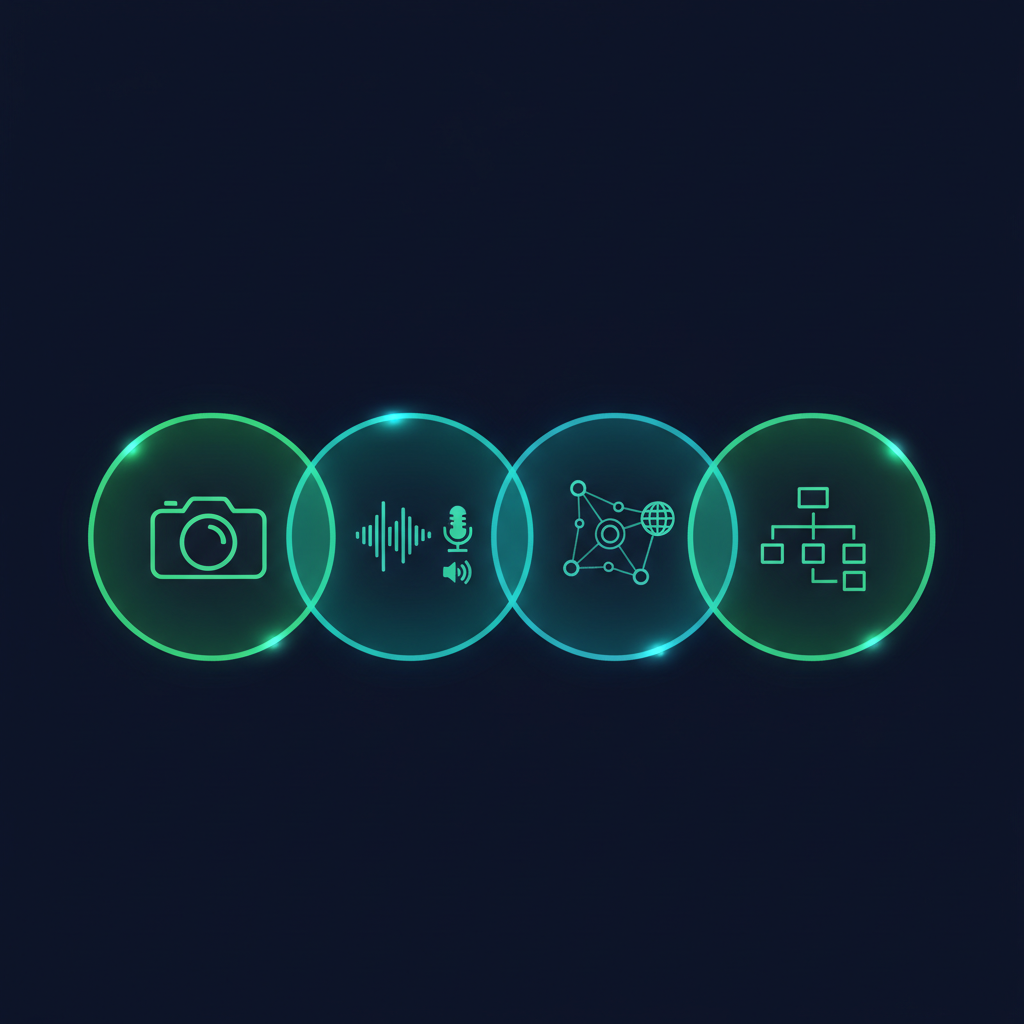
- Multimodal data fusion: The mmAI rule engine correlates IoT sensor data with computer vision detections and audio AI classifications, enabling cross-modal intelligence that no single data stream could support.
- Configurable rules: Operations teams define rules that span data types, IF temperature exceeds threshold AND visual inspection detects discoloration AND vibration exceeds baseline, THEN escalate to critical priority, without writing code.
The Multimodal Advantage in IoT
The most powerful application of IoT AI integration is not analyzing sensor data in isolation, but correlating it with other data modalities. A temperature spike from an IoT sensor tells you something is getting hot. A computer vision detection of discoloration on the same equipment tells you the heat is causing visible damage. An audio AI detection of unusual noise from the same asset tells you the thermal stress is affecting mechanical components. Each signal alone is a data point. Together, they tell a story, and the SAAI Suite's mmAI rule engine is designed to read that story automatically.
This multimodal correlation is what distinguishes a platform from a dashboard. Dashboards display data. Platforms correlate data, identify patterns, and trigger actions. The 5G Smart Factory deployment with Ericsson demonstrated this architecture in practice: IoT sensor data from production equipment flowing through 5G connectivity to AI models that correlate sensor readings with visual inspections and trigger automated maintenance workflows.
The value of IoT data is not in the readings themselves; it is in what those readings mean when correlated with visual evidence, acoustic signatures, and operational context. That correlation is what transforms data into intelligence.
Practical Architecture Guide
For organizations planning IoT AI integration, the architectural decisions that matter most are:
- Edge vs. cloud inference: Time-critical decisions (safety alerts, quality rejects) should run at the edge. Trend analysis and predictive models can run in the cloud. Plan for hybrid from the start.
- Data retention strategy: Not all sensor data needs to be retained at full resolution forever. Implement tiered storage: full resolution for recent data, downsampled for historical analysis, and anomaly-triggered full-resolution captures for events of interest.
- Start with high-value assets: Instrument the 20% of assets that cause 80% of unplanned downtime first. Prove ROI before expanding coverage.
- Choose a platform, not a toolkit: Building custom integration middleware is expensive and time-consuming. A platform with pre-built adapters and a multimodal rule engine delivers value faster and maintains more easily.
The sensor infrastructure is ready. The AI models are proven. The gap is integration, and closing that gap is the difference between an IoT investment that delivers continuous operational intelligence and one that generates an expensive stream of unused data.
Ready to See These Results?
Book a personalized demo and see how the SAAI Suite delivers measurable outcomes for your operations.